Wired to Wager: How Your Brain Gets Played Before You Even Place a Bet

Let's be straight with you: the house doesn't just have a mathematical edge. It has a neurological one too.
Every spin, every near-miss, every celebratory jingle that plays when you win back half of what you just lost — none of that is accidental. It's engineered. And the target isn't your wallet directly. It's the three-pound lump of grey matter sitting between your ears.
Understanding what's going on up there isn't about making you feel stupid for enjoying a punt. It's about giving you the same information the platform already has about you — so you can actually play on your terms instead of theirs.
The Chemical That's Costing You Money
Dopamine gets talked about a lot, usually in the context of social media or junk food. But gambling might be its most potent trigger outside of hard drugs.
Here's the thing most people get wrong: dopamine isn't released when you win. It's released in anticipation of a possible reward. That moment between the reels stopping and the result registering? That's your brain absolutely bathing in the stuff. Win or lose, the chemical hit has already happened.
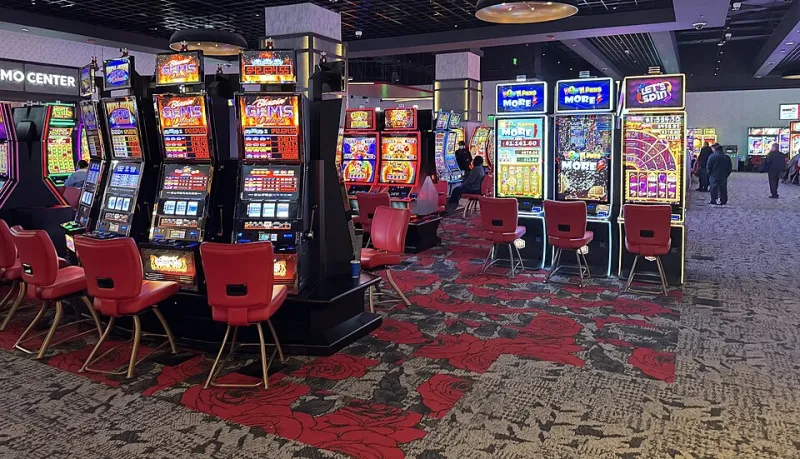
This is why you can lose twenty spins in a row and still feel compelled to keep going. Your brain isn't responding to outcomes — it's responding to uncertainty. And modern online pokies are precision-tuned to maximise that uncertainty window. Slower reel stops. Dramatic sound design. Visual effects that build tension. None of it is decoration. It's dopamine farming.
Near-Misses Are Not Bad Luck — They're a Feature
This one genuinely rattles people when they hear it for the first time.
A near-miss — where two jackpot symbols land and the third falls just short — is not a random unlucky outcome. In many pokie configurations, near-misses are deliberately programmed to appear more frequently than true probability would produce them. Regulators in various jurisdictions have cracked down on this over the years, but the psychological effect remains baked into game design regardless.
Why? Because your brain interprets a near-miss as evidence that you're close. That the next spin might be the one. Neurologically, near-misses activate similar reward pathways to actual wins. You feel the buzz without getting the payout, and that feeling pushes you to continue.
Researchers at the University of British Columbia found that near-misses significantly increased the urge to keep playing, even among people who understood intellectually that each spin is independent. Knowing the trick doesn't make you immune to it. That's how deep this runs.
The Notification Game
If you've got a casino app on your phone, pay attention to when those push notifications land.
It's rarely random. Platforms analyse user behaviour patterns — when you typically log on, how long your sessions run, what time of day you've historically deposited — and they time their outreach accordingly. A "your bonus is expiring" message at 9pm on a Friday isn't a coincidence. It's a calculated prod at a moment when your defences are down and your leisure mindset is up.
Bonus expiry timers are particularly effective because they trigger loss aversion, which is a separate but equally powerful psychological mechanism. Losing something you already have (or think you have) feels worse than not gaining it in the first place. So a notification telling you your free spins are about to disappear creates urgency that bypasses your rational decision-making entirely.
The result? You log on when you hadn't planned to, in a mental state you hadn't prepared for, and the session that follows rarely goes to plan.
Winning Animations and the Illusion of Frequency
Here's something that sounds almost too cynical to be true, but it's well-documented: many online pokies celebrate wins that are smaller than your original bet with the same fanfare as significant payouts.
Lights flash. Music plays. A counter ticks up dramatically. Your brain registers: I won. Your wallet registers: I'm down three bucks. The celebration overrides the accounting.
This is sometimes called a "losses disguised as wins" effect, and it's been studied extensively. When the audio-visual feedback for a net-loss spin mimics the feedback for a genuine win, players report feeling like they're winning more frequently than they actually are. Their perception of the session is distorted. And a player who feels like they're on a decent run is a player who keeps playing.
So What Do You Actually Do About It?
Knowing the science is step one, but it doesn't make you bulletproof. Here's what actually helps:
Set your limits before the session starts, not during it. Your pre-session brain is the rational one. Your mid-session brain is the one being chemically manipulated. Deposit limits, session timers, loss limits — use them before you load the game, not after you've already had a few spins.
Kill the sound. This sounds minor but it genuinely isn't. A significant portion of the psychological manipulation in pokies is delivered through audio. Muting the game strips away a huge layer of the engineered experience and lets you see the numbers more clearly.
Turn off push notifications. Go into your phone settings right now if you need to. No platform's notification is ever sent in your interest. It's sent in theirs.
Track your actual results, not your feelings. Keep a running note of your session total. When your brain is telling you you're "kind of up" and the number says you're down $80, trust the number.
Take breaks on a clock, not on a feeling. "I'll stop when I feel like it" is exactly the trap. Set a timer for 20 minutes. When it goes off, stop, stand up, do something else for five minutes. The interruption alone is often enough to break the loop.
The Razed Perspective
We're not here to tell you gambling is bad. This whole site exists because the punt is part of Australian life — the races, the tables, the pokies, the footy bets. That's not going away and we're not pretending it should.
But there's a difference between playing hard and getting played. The platforms you use know how your brain works. They've spent serious money learning it. The least you can do is spend ten minutes learning it too.
When you understand the near-miss mechanic, the notification timing, the winning animations — you're not immune, but you're informed. And informed is the closest thing to an edge a punter can have against the house.
Play bold. Just make sure it's you doing the playing.