Throttle Full Open: How High-Speed Games Are Built to Burn Through Your Bankroll Before Your Brain Catches Up
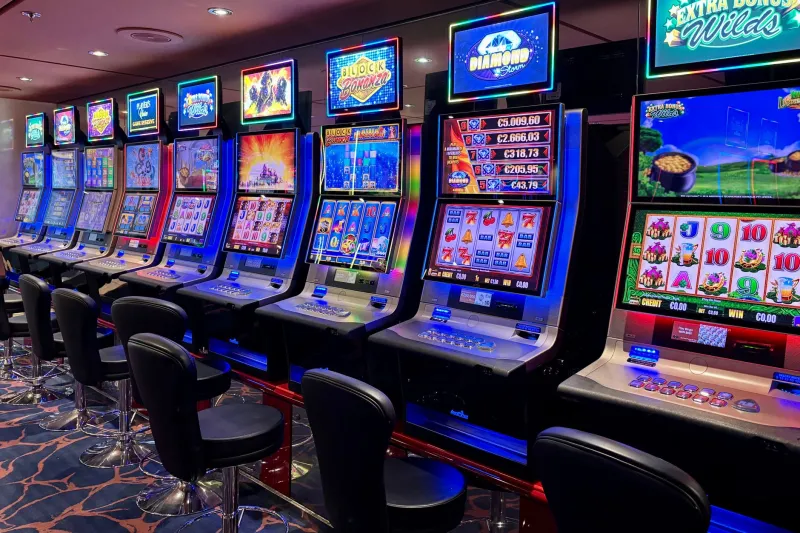
There's a reason a Friday night on the pokies feels like it evaporates in minutes. You sit down, feed in a fifty, and somehow it's gone before you've even finished your drink. It's not bad luck. It's not poor discipline. It's physics — or more accurately, it's psychology dressed up as entertainment, and it's running at a very deliberate speed.
Game velocity is one of the most underappreciated forces in gambling. We talk endlessly about house edge, RTP, volatility. But the rate at which money moves? That barely gets a mention. Which is exactly how the industry likes it.
The Clock Is the Real House Edge
Here's the maths that nobody puts on a brochure. If a pokie completes a spin every four seconds — which is pretty standard for a modern machine — you're playing 900 rounds per hour. At $1 a spin, that's $900 cycling through the machine every sixty minutes. Even with a theoretical return of 90%, the house is grinding $90 an hour out of your pocket in expected losses alone.
Now compare that to a game of blackjack at a full table. Realistically, you're seeing maybe 60 to 80 hands per hour. Same $1 bet, far lower house edge, and dramatically less money in motion. The pace alone makes blackjack a completely different financial proposition — not because the odds are wildly better, but because the exposure is so much lower.
Speed multiplies everything. It multiplies wins, sure. But it multiplies losses at the exact same rate, and since the house always holds an edge, the multiplication works harder against you than for you.
Your Brain Wasn't Built for This
Here's where it gets genuinely unsettling. The human brain operates on a decision-making cycle that simply wasn't designed for sub-five-second intervals. When you're playing a fast pokie or a turbo version of roulette, you're not really making 900 decisions per hour. You're making one decision — to keep playing — and then running on autopilot.
Neuroscientists call this "automaticity". Once a behaviour becomes routine and the environment provides consistent cues, the prefrontal cortex — the part of your brain responsible for rational judgement, risk assessment, and impulse control — essentially goes offline. You stop evaluating each bet. You're just spinning.
Rapid wins and losses also trigger competing dopamine responses that blur into a kind of neurological static. A quick loss followed immediately by a small win followed by another loss doesn't register as three separate events. It blurs into a single emotional experience that your brain reads as "almost winning". The speed prevents you from processing the losses clearly, and that ambiguity keeps you seated.
Live Dealer Games: Slow Enough to Feel Safe, Fast Enough to Hurt
Live dealer games occupy an interesting middle ground. They're marketed on authenticity — real cards, real wheels, real human croupiers — which creates a psychological sense of legitimacy and control. But modern live dealer platforms have quietly compressed the pace significantly compared to a physical casino floor.
In a brick-and-mortar setting, a roulette spin might happen every three to four minutes when you factor in payouts, table chatter, and the general chaos of a real venue. Online live roulette? You're often looking at a spin every 60 to 90 seconds. That's two to four times faster. The social authenticity remains. The financial protection of a slower game does not.
And because live dealer games feel more "real", Aussie punters tend to bet larger amounts per round. The combination of bigger individual bets and a compressed time interval creates a loss rate that can exceed even the pokies in dollar terms, despite a theoretically lower house edge.
Turbo Modes and the Illusion of Efficiency
Something worth calling out specifically: the rise of "turbo" or "fast play" options across online casino games. These features — which skip animations, compress win celebrations, and minimise the time between outcomes — are presented as a convenience. For busy players who don't want to sit through a five-second spin animation, they seem like a sensible quality-of-life improvement.
But what they actually do is remove the only natural pause points in the game. Those animations aren't just cosmetic. They're brief moments of cognitive processing. A two-second win animation gives your brain just enough time to register what happened, to feel the outcome, to make a conscious choice about what comes next.
Strip that away and you're in pure automaticity territory. Turbo mode isn't efficient. It's a trapdoor.
Slowing Down Is a Strategy, Not a Weakness
None of this means fast games are off the table — pun intended. But understanding the mechanics of game speed should change how you approach them.
If you're going to play high-velocity games like pokies or speed roulette, the single most effective thing you can do is impose artificial pauses. Set a hard limit on session length, not just bankroll. Take a break every 20 minutes. Use the deposit limits and session timers built into most licensed platforms — they exist for exactly this reason, and using them isn't admitting defeat, it's playing smarter than the machine expects you to.
Better yet, understand the difference between games that reward patience and games that punish it. Poker, blackjack, and even standard-speed table games give you time to think. That time is worth something. It's the gap between a reactive decision and a rational one.
The Bottom Line
Casinos aren't just selling entertainment. They're selling a specific tempo of entertainment, and that tempo is calibrated to move money faster than your rational mind can track it. The speed isn't incidental — it's structural. It's in the machine's design, the platform's interface, the feature set that strips out every natural breathing point.
At Razed Casino, we're all about the rush. But we're also straight with you: knowing what's happening under the hood is the difference between riding the wave and getting swallowed by it. The game is faster than your instincts. So be deliberate. Be conscious. And for the love of your bankroll, hit pause before the machine does it for you — permanently.