Maths Doesn't Lie: What the House Edge Really Means for Your Bankroll
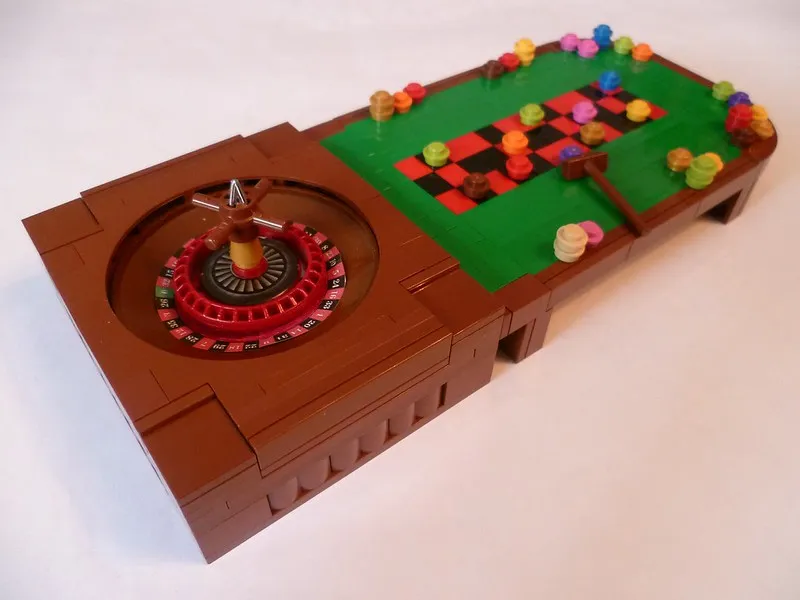
Photo: Legoloiii, CC BY-SA 4.0, via Wikimedia Commons
Let's get one thing straight before we go any further: the casino is not your mate. It's not trying to rip you off in some sinister, backroom-deal kind of way — it's just running a business, and that business is built on a very simple mathematical principle. Over enough time, the house collects more than it pays out. That's it. That's the whole game.
But here's the thing — understanding that principle doesn't mean you're powerless. It means you're finally playing with your eyes open.
What Is the House Edge, Actually?
The house edge is the percentage of every bet that the casino expects to keep over the long run. It's not about any single spin, hand, or roll — it's a statistical average baked into the game's design.
Take European roulette as an example. There are 37 pockets (numbers 1–36 plus a single zero), but a straight-up bet on a single number pays out at 35 to 1. That one-pocket gap is where the casino lives. The house edge sits at roughly 2.7%. American roulette adds a double zero, bumping that edge to about 5.26%. Same game, different wheel, nearly double the cost to you. If you're playing American roulette by choice, that's on you.
RTP — Return to Player — is the flip side of the house edge. An RTP of 97% means the game theoretically returns $97 for every $100 wagered. The casino keeps the other three bucks. Simple maths. The trick is that RTP figures are calculated across millions of rounds, not your Tuesday night session.
The Games Worth Your Time (and the Ones That Aren't)
Not all casino games are created equal. Some are designed to drain your bankroll at pace, while others — if played correctly — give you a genuinely competitive shot.
Blackjack sits at the top of the pile for good reason. Played with basic strategy (which you can look up, print out, and bring to the table — no one's stopping you), the house edge drops to somewhere between 0.5% and 1%. That's as close to an even contest as you'll find in a casino. Basic strategy isn't counting cards; it's just making the mathematically correct decision every single time based on your hand and the dealer's upcard.
Baccarat is another underrated option. Bet on the banker consistently, and you're looking at a house edge of around 1.06%. Ignore the tie bet entirely — that thing carries a house edge north of 14% and exists purely to hoover up chips from punters who get bored.
Video poker, particularly Jacks or Better played on a full-pay machine, can return over 99% with optimal play. The catch? You need to know the correct strategy for every hand. But if you're willing to put in the prep work, it's one of the best bets on the floor.
And then there are pokies. Look, no one's judging you for loving a spin — they're entertaining, they're colourful, and the bonus rounds hit different at 11pm on a Friday. But the RTP on most online pokies sits between 94% and 97%, and land-based machines in Australian pubs and clubs can be significantly lower. The variance is also brutal, meaning you can burn through your session budget before the free spins feature ever triggers. Go in knowing that.
Debunking the Myths That Cost Punters Money
A few stubborn myths keep circulating in Australian gambling circles, and they're worth torching.
"This machine is due for a win." No. It isn't. Each spin on a pokie is an independent event. The machine has no memory. It doesn't owe you anything. The gambler's fallacy is the belief that past outcomes influence future ones in a random system — they don't.
"I have a system for roulette." Martingale, Fibonacci, D'Alembert — these betting systems have been stress-tested by mathematicians for decades. They can manage variance in the short term, but they cannot eliminate the house edge. Doubling your bet after every loss sounds logical until you hit a losing streak and run into the table maximum or your own bankroll limit.
"Hot streaks are real." Variance is real. Streaks happen within variance. The casino isn't suddenly giving you better odds because you've won three hands in a row. Book the win, adjust your session expectations, and don't mistake luck for skill.
Playing Smart Without Playing Scared
None of this means you should sit at home reading about expected value instead of actually gambling. That would be missing the point entirely.
The smarter move is to choose games with lower house edges, learn the optimal strategies for those games, and set your session budget around entertainment value rather than expected profit. If you walk into a casino with $200, a plan to play blackjack for two hours using basic strategy, and the discipline to walk when the money's gone — that's a solid night out. You might finish ahead. You might not. But you gave yourself the best realistic shot.
Knowing the maths doesn't kill the thrill. It just makes sure you're not getting razed by your own ignorance.
Play the odds. Know the numbers. And for the love of everything, switch to European roulette.