Cracking the Cup: A Punter's Playbook for Surviving Melbourne Cup Season with Your Wallet Intact
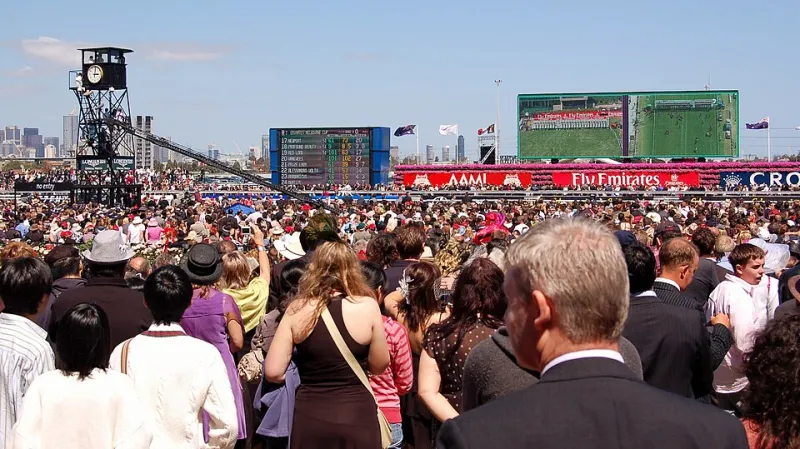
Photo: Bahnfrend, CC BY-SA 4.0, via Wikimedia Commons
The first Tuesday in November hits Australia like a starting gun. Office sweepstakes get drawn, fascinators come out of storage, and suddenly everyone from your nan to your tradie mate is an expert on staying power, track conditions, and international stayers. The Melbourne Cup — 3,200 metres of pure, chaotic, heart-thumping spectacle — is more than a horse race. It's a national ritual.
But here's the thing nobody tells you at the champagne breakfast: the Cup is also one of the easiest events to bet badly on. The noise is deafening, the odds shift like sand, and punters who haven't done a lick of research end up lighting their cash on fire for the sake of tradition. At Razed Casino AU, we're all about betting bold — but bold doesn't mean blind. Here's how to approach the Cup with your head screwed on.
Know What You're Actually Betting On
The Melbourne Cup is a Group 1 handicap race, which means the weights carried by each horse are adjusted to theoretically level the playing field. That's the first thing casual punters miss. A horse that looks dominant on paper might be lugging extra kilos that slow it down significantly over the gruelling distance.
Before you even glance at the odds board, understand the field breakdown:
- International stayers — European-trained horses, particularly from Ireland and the UK, dominate the winners' list. Since the 1990s, overseas runners have won more than half the Cups on record.
- Barrier draw — Flemington's course favours horses drawn in the middle barriers (roughly 5–14). Wide draws mean early energy spent getting into position, which kills stamina in a long-distance grind.
- Trainer and jockey combinations — Certain stables have cracked the code. Names like Aidan O'Brien and Chris Waller consistently produce competitive runners. Don't ignore the humans behind the horses.
Reading Form Guides Without Going Cross-Eyed
A form guide can look like ancient hieroglyphics if you're not used to reading one. But you don't need to decode every symbol — focus on the indicators that actually matter for a staying race.
Recent runs over distance are your starting point. Has the horse run 2,800 metres or more competitively? The Cup's 3,200m is brutal, and horses that haven't proven themselves over a genuine staying trip are a risk regardless of their sprint form.
Track and going conditions are equally critical. Flemington in early November can be anything from firm to heavy depending on whether Melbourne's weather decides to behave. Horses with strong form on soft going become much more attractive if rain hits the track in the days before the race.
Recent lead-up races are telling. The Cox Plate, the Caulfield Cup, and the Moonee Valley Cup all serve as key form guides. Horses that have run well in those lead-ups without being over-raced are typically peaking at the right time.
The Odds Trap — And How to Avoid It
Here's where a lot of punters get razed without realising it: they wait until race morning to place their bets, by which point the market has already moved dramatically.
The smart play is to track odds movements from the moment markets open — sometimes weeks out. When sharp money comes in early on a horse and the price contracts significantly before most punters are even paying attention, that's a signal worth noting. Conversely, a horse that opens at short odds and drifts out in the days before the race is usually drifting for a reason.
Best-tack betting is another tool worth using. Prices vary across platforms, and locking in an early price on a horse before the market shortens can be the difference between a solid return and a disappointing one.
And whatever you do — don't chase the favourite blindly. The Melbourne Cup favourite wins less than 20% of the time historically. That's not a market to follow on brand recognition alone.
Common Cup Betting Mistakes (That You're Probably Making)
Let's be honest about the moves that burn people every single year:
The sweep trap. Winning a sweep horse feels like a mandate from the universe. It isn't. Your sweep draw and your actual betting wallet should be completely separate conversations.
Betting on the name or the story. Emotional connections to a horse's backstory — the comeback narrative, the trainer's touching interview, the horse with the unusual name — have absolutely no bearing on performance. The track doesn't care about the story.
Spreading too thin. Some punters try to cover the field with small bets on every runner, thinking they can't lose. You can lose. Spreading across 20+ horses at low stakes usually results in a net negative when you factor in the ones that don't place.
Ignoring the exotic markets. Quinella, exacta, and trifecta bets can generate serious returns if you've done your homework. A well-constructed trifecta box using three or four researched runners can be more profitable than a straightforward win bet at short odds.
Building a Smart Cup Betting Budget
The Melbourne Cup is one race — but Cup Week is a full programme. Races like the Mackinnon Stakes and the Victoria Derby are premium betting opportunities that often get overlooked while everyone fixates on Tuesday.
Set a total budget for the week, not just the Cup itself. Divide it deliberately: a portion for the Cup, a portion for the undercard races, and a portion held back for live betting if you want to react to late scratchings or track condition changes on race day.
Never, ever bet money you need. That sounds obvious, but the Cup has a way of making people feel like a big win is inevitable. It isn't. The rush is real, the returns can be massive — but so can the losses if you go in without a plan.
Back Yourself — But Back Yourself Smart
At Razed Casino AU, we don't back down from big bets and we don't apologise for chasing serious returns. But the boldest thing a punter can do on Melbourne Cup day isn't throwing the biggest stack — it's walking in with a strategy, reading the market better than the person next to you, and making calculated decisions while everyone else is riding pure emotion.
The Cup will get you fired up. That's the whole point. Just make sure when the field rounds the final turn, your head is still in the game — because the punters who get razed on race day are almost always the ones who stopped thinking the moment the champagne started flowing.
Study the form. Watch the barriers. Track the money. And when you're ready to back your pick — back it properly.